


Search Blog
Recent Posts
-
 Highly Effective Tips to...
Discover actionable PrestaShop SEO tools and AI content strategies to boost search rankings and increase e-commerce...
Jul 13, 2026 Read more
Highly Effective Tips to...
Discover actionable PrestaShop SEO tools and AI content strategies to boost search rankings and increase e-commerce...
Jul 13, 2026 Read more -
 How to Turn Your PrestaShop...
Learn how to build a PrestaShop B2B marketplace using customer groups, wholesale pricing, business verification, bulk...
Jul 13, 2026 Read more
How to Turn Your PrestaShop...
Learn how to build a PrestaShop B2B marketplace using customer groups, wholesale pricing, business verification, bulk...
Jul 13, 2026 Read more -
 The Frictionless Checkout...
Learn how to reduce B2B cart abandonment by optimizing your PrestaShop checkout with flexible forms, file uploads,...
Jul 6, 2026 Read more
The Frictionless Checkout...
Learn how to reduce B2B cart abandonment by optimizing your PrestaShop checkout with flexible forms, file uploads,...
Jul 6, 2026 Read more -
 EU Directive 2023/2673...
Learn how to prepare your PrestaShop store for EU Directive 2023/2673 with a practical compliance checklist that...
Jul 3, 2026 Read more
EU Directive 2023/2673...
Learn how to prepare your PrestaShop store for EU Directive 2023/2673 with a practical compliance checklist that...
Jul 3, 2026 Read more -
 Ecommerce SEO for Google &...
Learn how online stores can improve visibility in Google, AI Overviews, ChatGPT, Gemini, and other AI search...
Jun 8, 2026 Read more
Ecommerce SEO for Google &...
Learn how online stores can improve visibility in Google, AI Overviews, ChatGPT, Gemini, and other AI search...
Jun 8, 2026 Read more

Canonical vs Hreflang Tag: Differences, and How to Use Them Together for SEO Success
Posted On: Apr 13, 2026
Categories: Marketing , PrestaShop SEO Best Practices: Guides, Checklists & Tips
Author: Zarak
Canonical and hreflang tags are two essential tools in technical SEO that often get confused, but they serve very different purposes. If your website has similar or duplicate pages, or if you target users in different languages and regions, using these tags correctly helps search engines understand how your content should be indexed and displayed.
This guide provides a comprehensive breakdown of canonical vs hreflang tags, including what they are, how they function, when to use them, and how to combine them effectively without creating conflicts.
What is a Canonical Tag?
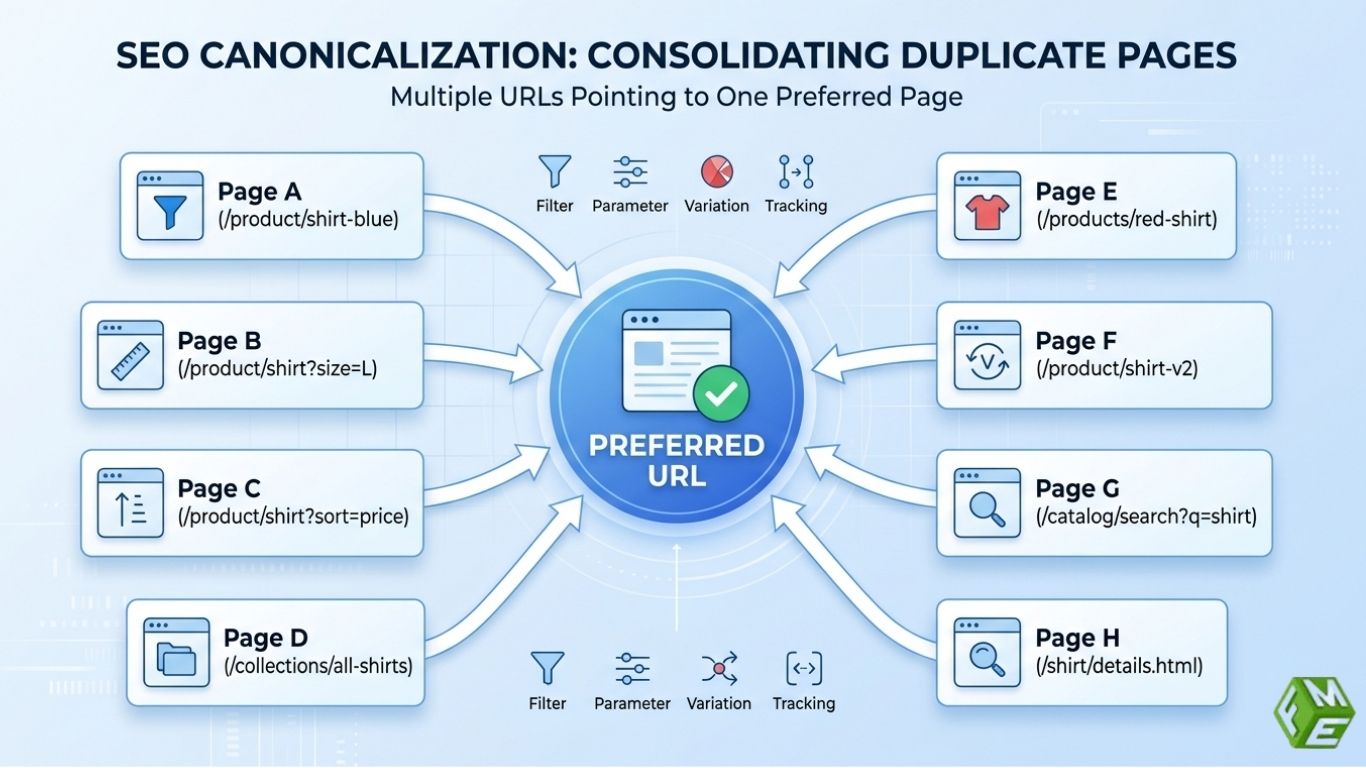
A canonical tag is an instruction given to search engines that specifies the preferred version of a webpage when multiple URLs contain identical or very similar content. In practice, websites often generate duplicate pages due to filters, tracking parameters, session IDs, or even content management system quirks. Without proper handling, search engines may treat these URLs as separate pages, diluting ranking signals and creating confusion about which page should appear in search results.
A canonical tag groups all ranking signals (such as backlinks, authority and relevance) into a single “master” URL. This allows search engines to index only one version while still enabling users to access other versions if necessary. While canonical tags are advisory only, not a commandment directed at search engines (and will not always be followed), they are obeyed most of the time when implemented correctly.
Canonical tags are common on eCommerce sites, where product variations (size, color, sorting filters) create multiple URLs with nearly duplicate content. Most PrestaShop stores also use Hreflang and Canonical Tags Modules for this purpose.
What is an Hreflang Tag?
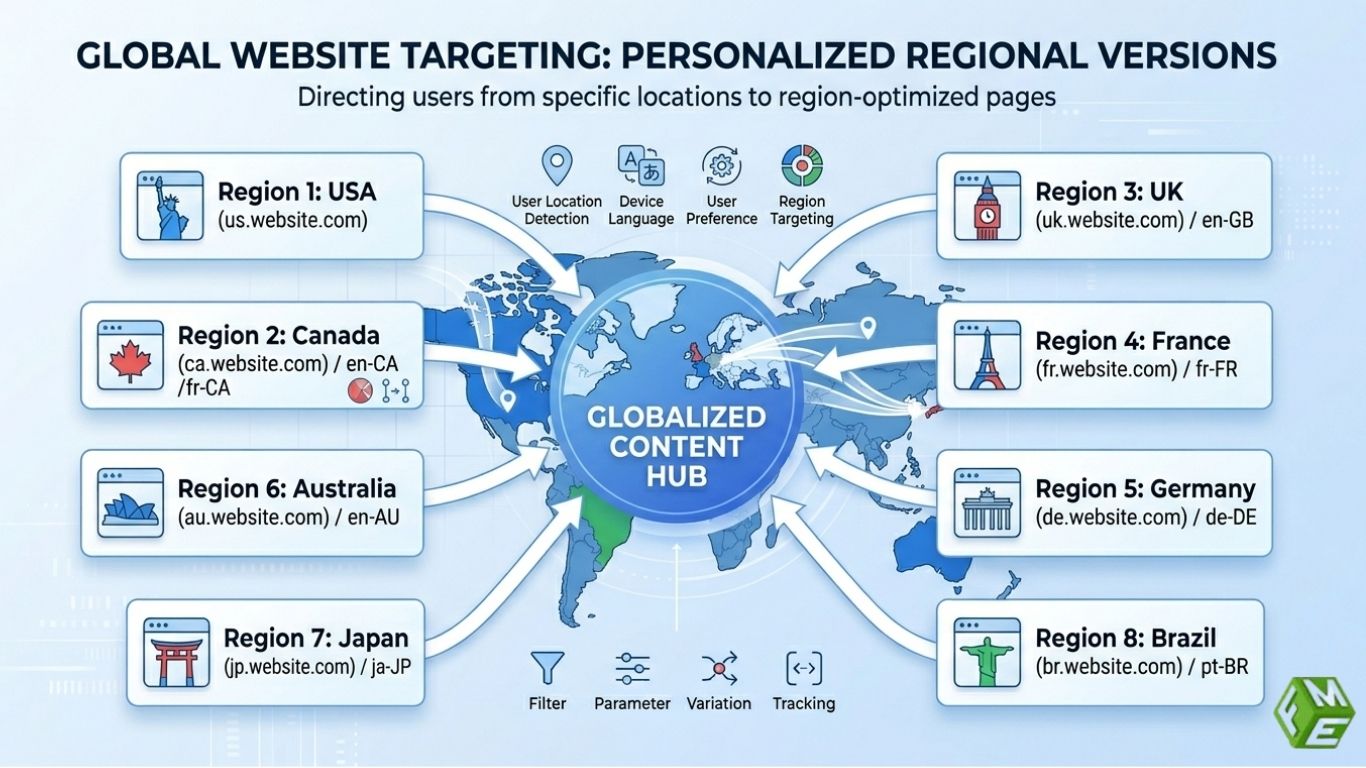
An hreflang tag notifies language and geographic targeting of a webpage. It allows search engines to serve the most relevant version of a page to users based on their language and geographic location. This is especially critical for sites that serve more than one country or offer content in multiple languages.
Hreflang does not merge pages into a single version as canonical tags do. Rather, it indicates that there are several versions of a page for different audiences, all of which are legitimate. The problem with the above is that each version can be indexed independently, but search engines will decide which one to show based on the user’s context.
For instance, a website might have different pages for English users in the United States, English users in the United Kingdom, and French users in France. While the content may be similar, differences in language, currency, spelling or cultural references are enough to merit separate pages. Hreflang tags are used to make sure that users in these regions find the best version for them.
For international e-commerce or PrestaShop SEO this tag is highly significant because it minimizes the likelihood of users visiting a wrong language page that could affect their engagement, bounce rates and conversions.
Canonical vs Hreflang Tag: Key Differences You Should Know
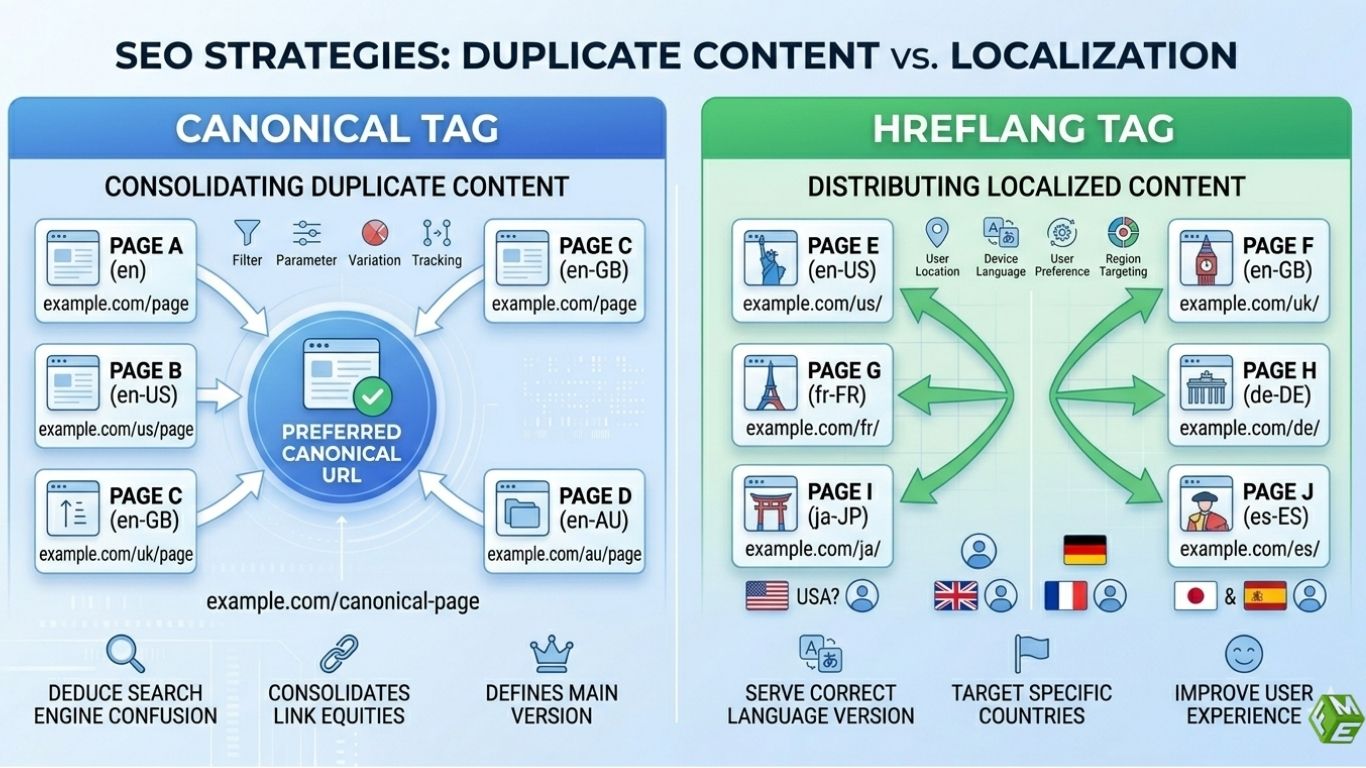
The main difference between canonical and hreflang tags is that they serve different purposes and have different names. Canonical tags come to the rescue of duplication issues and allow you to determine the authoritative version of a page, i.e., giving search engines the order not to index other similar versions. Hreflang tags, in contrast, are used only to differentiate legitimate versions of a page for different audiences.
Another important difference is how these tags influence indexing. With a canonical, only the canonical URL is indexed (the alternate versions are excluded). All versions are indexable, as they serve different users, even though they share crossover content.
Moreover, canonical tags are meant to concentrate SEO signals like backlinks and ranking authority into a single URL, while hreflang do the opposite by distributing visibility across multiple localized pages. Canonical tags are vital for clearing up messes in technical SEO, and hreflang tags are important for international targeting schemes.
Understanding the difference here is crucial, since misusing one tag in the wrong context can cause serious SEO issues for you, such as deindexing critical pages or serving incorrect content to users.
Canonical and Hreflang: How Do They Collaborate?
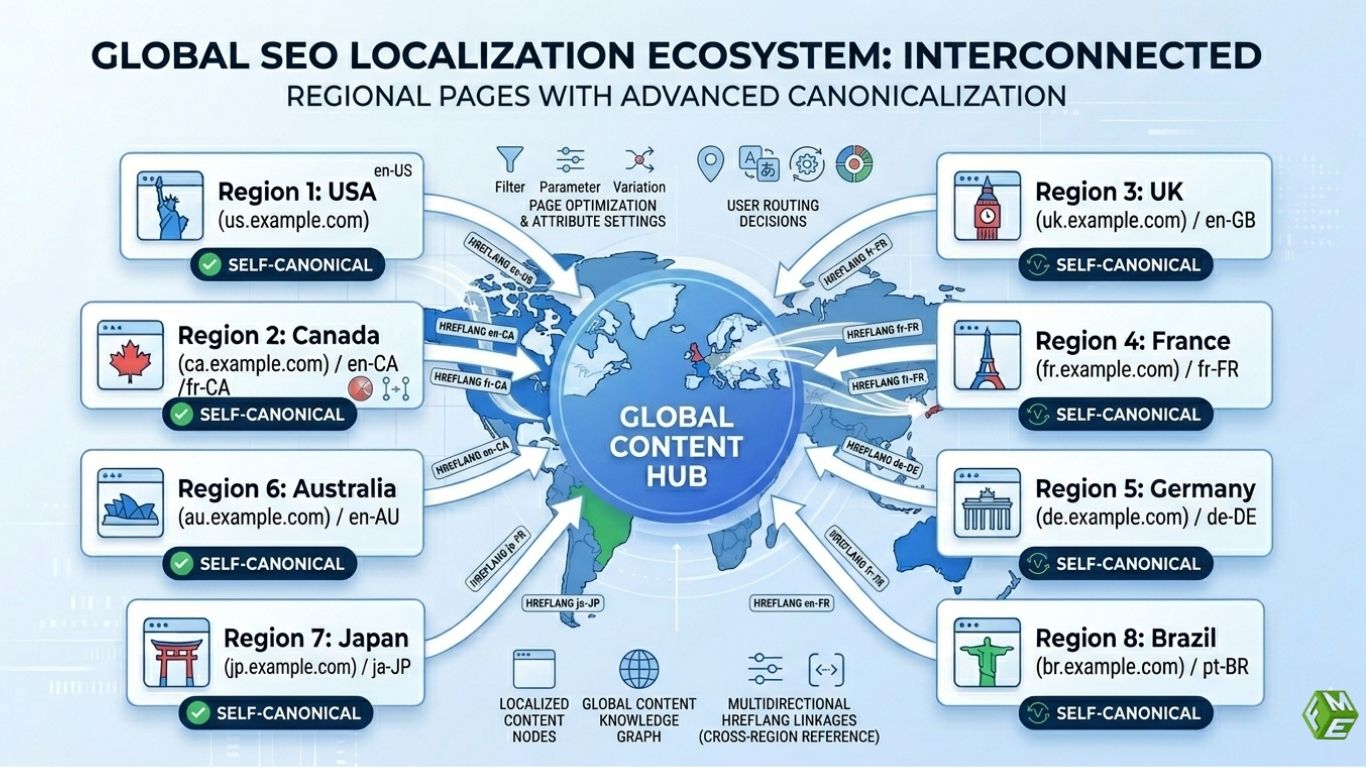
While canonical and hreflang tags each have unique functions, they are frequently implemented together on the same website, which has both duplicate and international content. When well implemented, they should complement each other rather than conflict.
You need to add a self-referencing canonical tag to each page, designating it as the preferred version of its content. Simultaneously, you can find hreflang tags linking all alternate language or regional versions. This topical clustering setup gives search engines the impression that each page is authoritative in its own context but part of a larger, localized set of alternatives for that topic.
The trouble occurs when these tags offer conflicting signals. For instance, search engines might disregard the hreflang tags and index only the canonical version if all language versions of a given page point to a single canonical URL. This is the opposite of what localization aims to achieve and could lead users to the wrong language page.
To prevent this, it is crucial to ensure that canonical tags do not take precedence over hreflang signals. When a page participates in an hreflang cluster, every page must maintain its own canonical reference.
When To Use Canonical Tags
Canonical tags are used whenever you have multiple, identical (or highly similar) content on different URLs that is not meant to rank separately in search engines. This often occurs with URL parameters, pagination, session-based URLs in eCommerce stores, and duplicate product pages.
For instance, if each filtered URL leads to the same product page, they should all point to one canonical version. This guarantees that anything like a duplicate page is not indexed by search engines, and the ranking signals are consolidated.
Canonical tags can also help when republishing content across different sections of a website or syndicating content to external platforms. This can often be accomplished by specifying the canonical version of any duplicate content, that is, giving credit to the original source.
When To Use Hreflang Tags
Implement hreflang tags when content is served to users in more than one language or multiple regions, and those audiences receive different versions of the same content. This may include situations where you might switch languages altogether or where your language stays the same, but there are regional differences, such as currency, pricing, or even spelling variations.
For example, an English-language page targeting users in the USA might look slightly different from a version targeting users in the UK. They are both in English, but they cater to different audiences and should be treated as separate pages linked with hreflang tags.
Proper implementation of hreflang allows search engines to understand these differences and ensures that users land on the most relevant page, thereby enhancing user experience and conversion rates.
Common Mistakes To Avoid in Canonical Tags vs Hreflang Tag
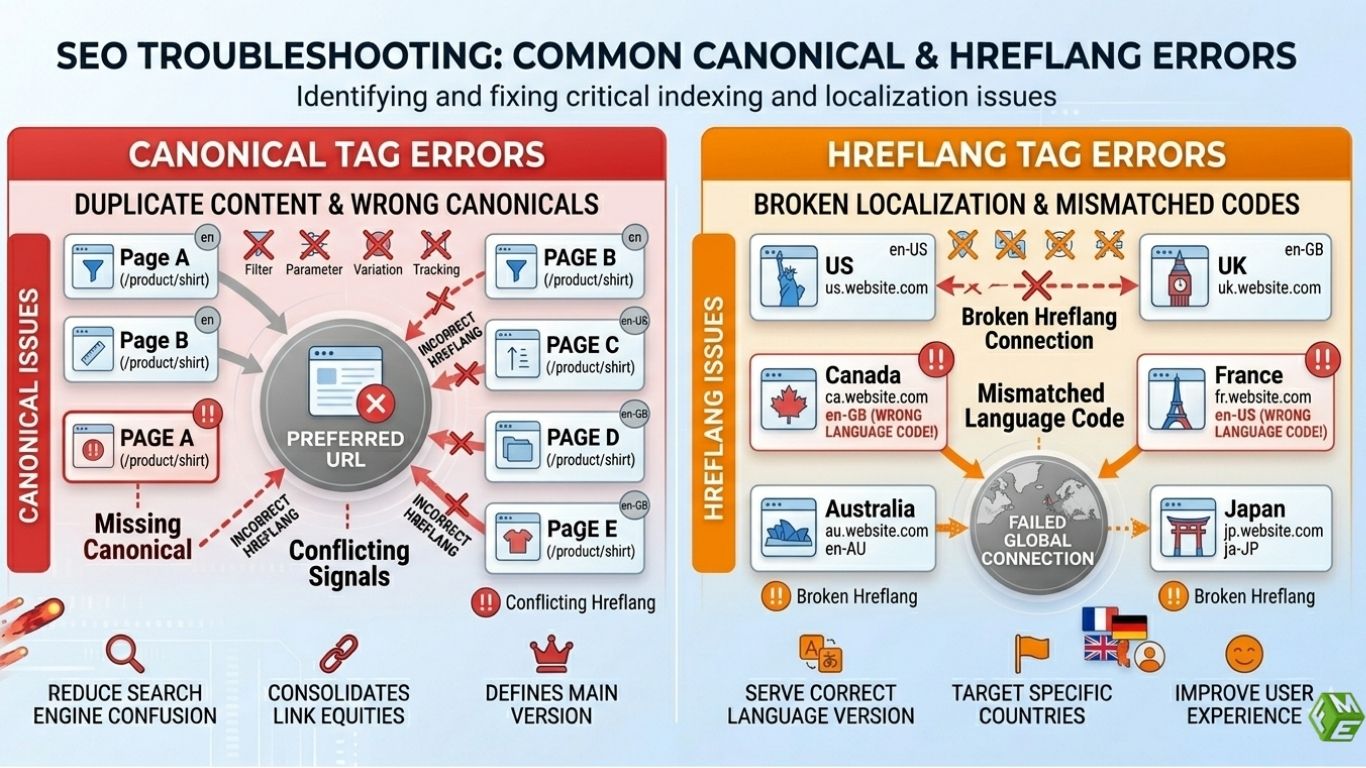
Using canonical tags instead of hreflang tags on international pages is one of the biggest mistakes. As a result, only one version is indexed, and the other localized pages are hindered from appearing in search results. Another common issue is conflicting signals, where the canonical tag points to one page, but hreflang tags point to several others, leading search engines to ignore one or both directives.
Common errors are missing canonical tags, incorrect language/country codes in hreflang attributes and the lack of reciprocal hreflang links between pages. Such errors decrease both tag efficiency and potentially introduce indexing discrepancies.
Canonical and hreflang tags must be implemented carefully and audited regularly to work as intended.
SEO Advantages of High-quality Utilization in Both tags
Canonical and hreflang tags, when implemented correctly, offer significant SEO benefits. Since they eliminate duplicate content, canonical tags are known to improve crawl efficiency and consolidate ranking signals, which can increase visibility for the chosen page. On the other hand, hreflang tags can help to improve international targeting by showing users content that fits their language and location.
This formats your HTML output so that search engines can easily discover it. This results in better indexing, higher rankings across regions and more personalized user experiences.
Best Practices for Implementation
If you're going to leverage canonical tags, make sure that you use absolute URLs and do not create a circular reference where one canonical references another. Instances where a page does not define its preferred version should be resolved by providing clear definitions on the page.
Accuracy is key with hreflang tags. The language and country codes must be in standard formats, and every page should provide return links to all other versions in the hreflang cluster. Highly recommended to have a default version for those who do not belong to any specific language or region.
The most important thing to keep in mind when combining the two tags is clarity. It should also link to its alternate versions via hreflang, but have a self-referencing canonical tag on each page. Search engines get consistent signals about the content and can index and show it correctly.
Final Thoughts
The debate around canonical vs hreflang tag is not about choosing one over the other but understanding how each serves a unique role in SEO. Canonical tags are essential for managing duplicate content and consolidating authority, while hreflang tags are indispensable for targeting international audiences and delivering the right content to the right users.
By implementing both correctly and avoiding common pitfalls, you can create a strong technical SEO foundation that supports better rankings, improved user experience, and global visibility.
-
What is the main difference between canonical and hreflang tags?
The main difference is that canonical tags are used to handle duplicate content by specifying a preferred version of a page, while hreflang tags are used to indicate language and regional variations of content for different audiences. Canonical consolidates pages into one, whereas hreflang connects multiple versions without merging them.
-
Can canonical and hreflang tags be used together?
Yes, canonical and hreflang tags should be used together when managing multilingual or multi-regional websites. Each page should have a self-referencing canonical tag and also include hreflang annotations pointing to alternate versions. This ensures proper indexing and correct targeting.
-
What happens if canonical and hreflang tags conflict?
If canonical and hreflang tags send conflicting signals, search engines may ignore one or both. For example, if all language versions point to a single canonical URL, search engines might ignore hreflang tags and only index one version, leading to poor international SEO performance.
-
Should each hreflang page have a canonical tag?
Yes, every page that includes hreflang tags should also have a self-referencing canonical tag. This helps search engines understand that each page is the preferred version for its specific language or region.
-
When should you use a canonical tag?
Canonical tags should be used when multiple URLs have identical or very similar content, such as parameterized URLs, filtered product pages, or duplicate content across categories. It helps consolidate ranking signals into one primary page.
-
When should you use hreflang tags?
Hreflang tags should be used when your website targets users in different languages or regions. They ensure that users see the correct version of a page based on their language preference or geographic location.
-
Do hreflang tags prevent duplicate content issues?
Hreflang tags do not fix duplicate content issues. They only help search engines understand that similar pages are intended for different audiences. If there is duplication within the same language or region, canonical tags should be used instead.
-
What is a self-referencing canonical tag?
A self-referencing canonical tag is one in which a page points to itself as the preferred version. This is considered a best practice and helps prevent ambiguity for search engines.