


Search Blog
Recent Posts
-
 Ecommerce SEO for Google &...
Learn how online stores can improve visibility in Google, AI Overviews, ChatGPT, Gemini, and other AI search...
Jun 8, 2026 Read more
Ecommerce SEO for Google &...
Learn how online stores can improve visibility in Google, AI Overviews, ChatGPT, Gemini, and other AI search...
Jun 8, 2026 Read more -
 How to Use PrestaShop...
This blog post looks into how you can use prestashop modules effectively and how you can enhance your store's...
May 5, 2026 Read more
How to Use PrestaShop...
This blog post looks into how you can use prestashop modules effectively and how you can enhance your store's...
May 5, 2026 Read more -
 Best Shopping Cart for SEO...
This blog compares the best shopping cart platforms for SEO in 2026, including Shopify, WooCommerce, Magento,...
Apr 20, 2026 Read more
Best Shopping Cart for SEO...
This blog compares the best shopping cart platforms for SEO in 2026, including Shopify, WooCommerce, Magento,...
Apr 20, 2026 Read more -
 Canonical vs Hreflang Tag:...
Canonical tags prevent duplicate content by selecting a preferred page, while hreflang tags target language and...
Apr 13, 2026 Read more
Canonical vs Hreflang Tag:...
Canonical tags prevent duplicate content by selecting a preferred page, while hreflang tags target language and...
Apr 13, 2026 Read more -
 PrestaShop 9.1: A Major...
Learn what’s new in PrestaShop 9.1, including performance upgrades, modern architecture, and improved developer...
Apr 6, 2026 Read more
PrestaShop 9.1: A Major...
Learn what’s new in PrestaShop 9.1, including performance upgrades, modern architecture, and improved developer...
Apr 6, 2026 Read more

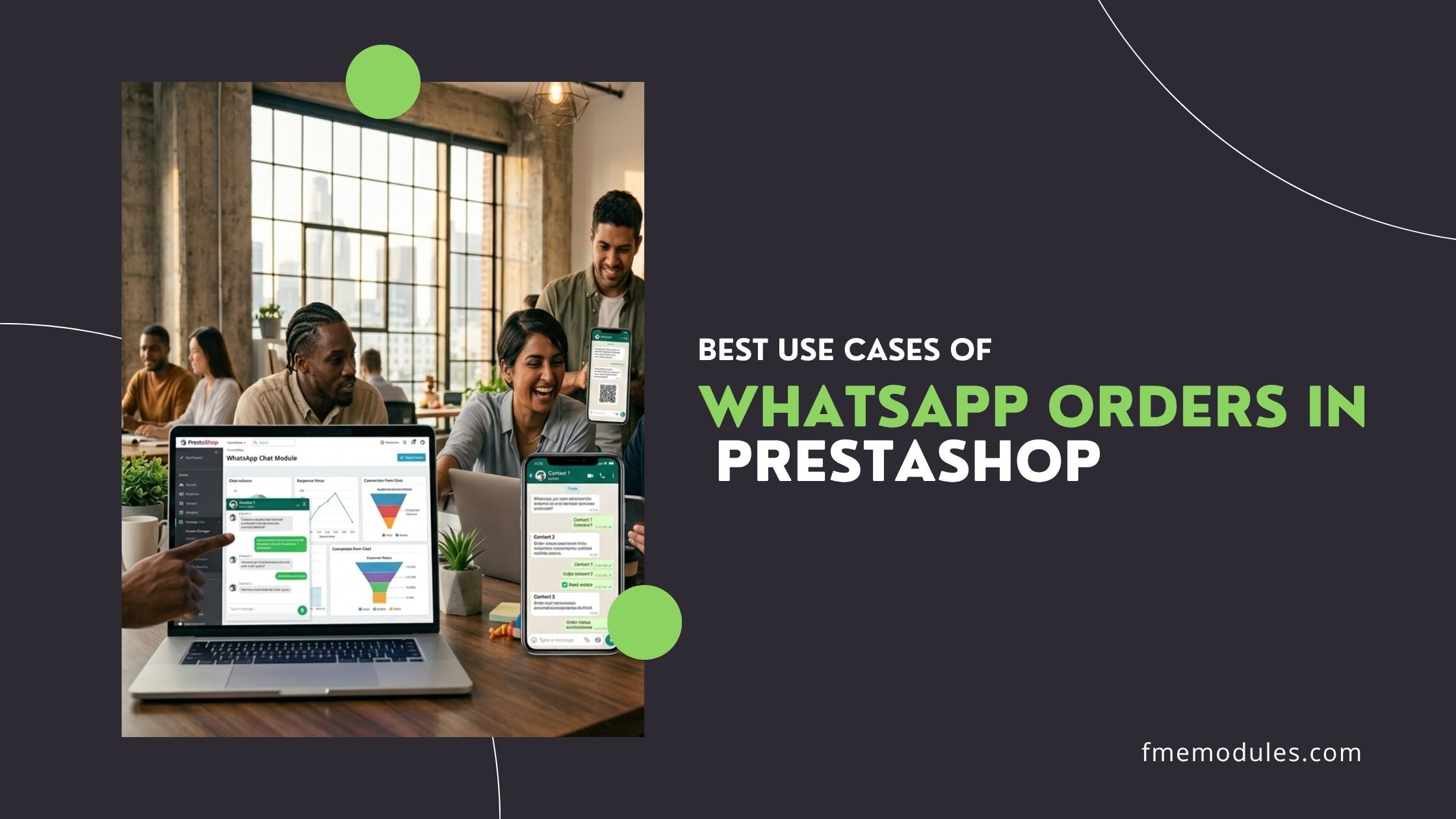
Best Use Cases for WhatsApp Orders in PrestaShop Stores
Posted On: Mar 30, 2026
Categories: Marketing , PrestaShop Module Updates: News, Features, and Improvements
Author: Zarak
WhatsApp is no longer just a messaging app; it has become a powerful sales and engagement channel for PrestaShop stores. Merchants can now answer customer questions instantly, share offers, and even close sales directly through chat without delays.
That said, WhatsApp is not a complete replacement for an online store. While it excels in conversational selling and assisted orders, many businesses still rely on traditional checkout for automation. In this guide, we’ll explore the most effective use cases of WhatsApp orders and how they can drive more sales.
Why WhatsApp Orders Match Priorities for Some Stores
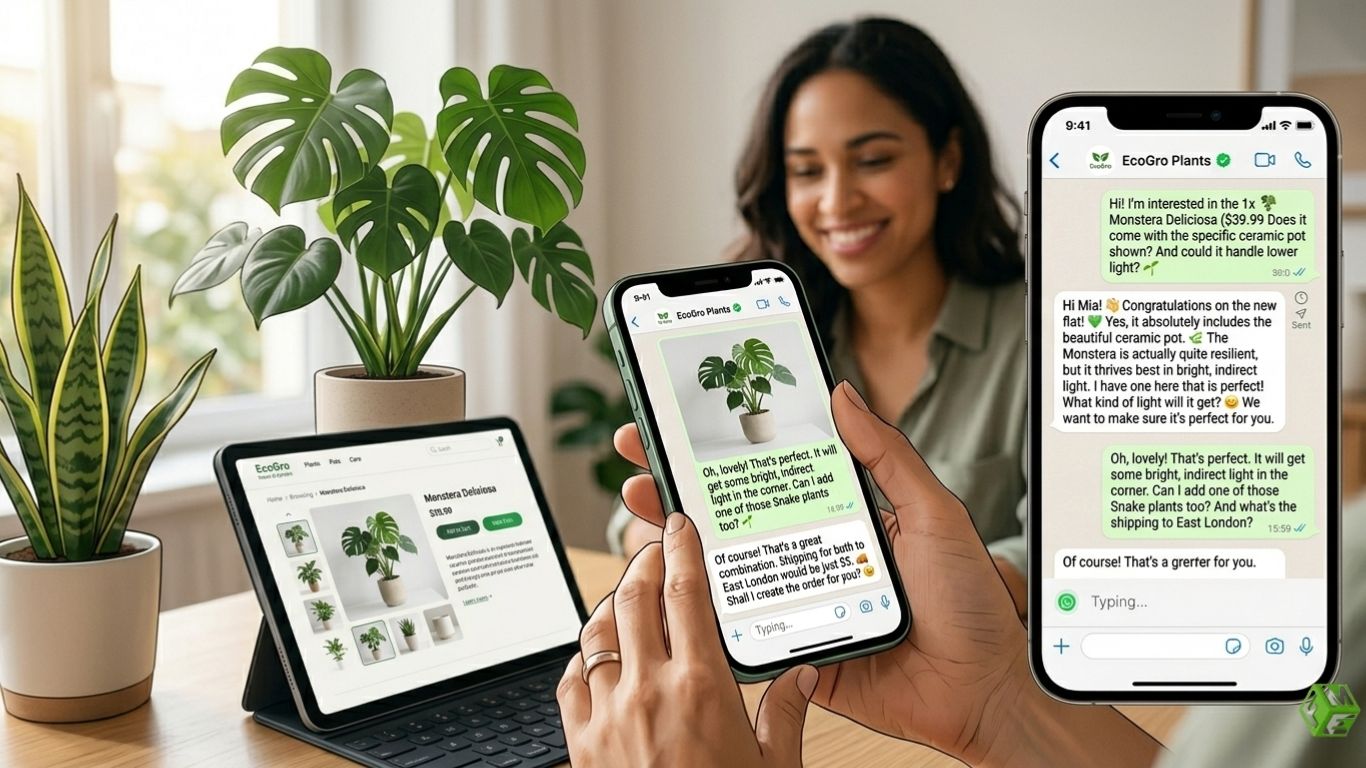
WhatsApp Order and conversational selling in general work very fast and are simple. Instead of an automated checkout, they can talk to a real human on WhatsApp and get their questions answered in real time.
With this in mind, getting customer trust is much easier as they are more relaxed about talking to a real person, and as a result, are more apt to complete a purchase. This is especially important when selling online, as it is much easier to take advantage of people and promote trust issues, leading to purchases from people and brands that are less established.
Moreover, WhatsApp allows for human communication, which is an important part of the decision-making process. Whether it’s about clarifying product information or haggling for a better price, communicating during a decision-making process helps eliminate consumer reluctance and pushes them closer to making a purchase.
As compared to other platforms, WhatsApp helps users transact quickly and easily. This is especially important when coupled with Cash on Delivery (COD) payment options.
Use Case 1: Shops Selling Custom or Personalized Items

Integrating WhatsApp with your store can be especially beneficial if your store sells made-to-order goods. These may include customized apparel, printed products, engraved pieces of jewelry, or gifts that can be personalized on demand.
Most online shops fail to accommodate them because customers often have varied instructions and requests. Also, online forms simply cannot accommodate all of these requests, as can be illustrated with the example of a customer purchasing a custom T-shirt and wanting to specify the design and color of the shirt as well as the text.
WhatsApp allows customers to do a number of things, including;
- Sending images or other references.
- Providing instructions and design requirements to the seller.
- Confirming design preferences instantly.
Client: "Hey, can I get a black hoodie, please? I have a design I want to put on the back. Do I just send it to you?"
That type of communication allows merchants to collect all of the necessary design details to avoid mistakes that require extra work, so orders don't get returned for refunds. It also appeals to customers more because they can be a part of the design process. Presta Merchants can easily use this functionality with the Prestashop whatsApp order and chat module by FME Modules.
Use Case 2: Selling Services or Goods that Cost a Lot of Money
Selling things like electronics, office furniture, machinery, or anything business-to-business (B2B) is best done using WhatsApp.
Customers who buy high-ticket items have more questions that need to be answered before they decide to buy. They may want to confirm details, compare different items, or inquire about warranty and delivery options.
For example, a customer may ask the following when buying a laptop:
“Will I be able to edit videos on it? If so, what other laptops would you recommend?”
Merchants build customer confidence through WhatsApp. They can send personalized recommendations and product comparisons, and that basically means even fewer questions customers have and more likely they are to buy.
Negotiation and reassurance over WhatsApp is crucial, especially for high-ticket or business-to-business (B2B) sales. Customers suffering from uncertainty don't have to be lost anymore. Instead, businesses can help their customers to make a decision.
Use Case 3: Stores with Cash on Delivery and Local Delivery
WhatsApp ordering is especially useful for stores with Cash on Delivery (COD) services. Customers in these markets prefer paying when the goods are delivered, rather than paying online.
It is also important to note that placing an online order and paying via the checkout can be seen as an unnecessary and complicated step. With WhatsApp, customers just place an order via chat.
For instance, a customer can say:
“Hi, I’d like to order 2 pizzas for delivery tonight. My address is…”
It is also important to note that this can be especially useful for the quick handling of orders for restaurants, grocery stores, and other local businesses. Merchants can also do the following:
- Confirm the details.
- Set a delivery time.
- Reduce the chances of receiving fake orders.
With WhatsApp order button, stores can facilitate ordering in a quick and easy manner, especially in regions with COD services.
Use Case 4: Stores in the Fashion, Beauty and Lifestyle Segment
WhatsApp can also be very useful for stores in the Fashion, Beauty and Lifestyle segment. This is especially true when customers are indecisive and need assistance with choosing the right size, color, etc.
For instance, a customer can ask:
“Does this dress run small or true to size?”
Via WhatsApp, store owners are also able to respond immediately and make suggestions. This can present opportunities to increase sales and to sell more by making additional offers.
Another factor is that impulse buying has increased due to WhatsApp. With just a few messages, a casual browser can transform into a customer. For example, if a customer is looking for some skincare products, they might get personalized messages, and that could motivate them to purchase some products.
Use Case 5: B2B, Wholesale & Bulk Order Stores
WhatsApp works great for B2B and wholesale businesses, where orders are typically large and involve negotiations.
Standard checkout systems are ineffective for bulk orders and custom pricing. Instead, businesses can use WhatsApp to:
- Talk about order size.
- Provide a bulk discount.
- Confirm stock.
For example:
“We need 500 units of this product. Can you offer a bulk discount?”
This conversational method reduces complexity when buying and improves relationships between businesses. This means fewer emails and more efficient transactions.
Use Case 6: Small Businesses & New PrestaShop Stores
For small to recently launched PrestaShop stores, WhatsApp is a cheap and minimal use sales channel.
Building intricate checkout systems or automation pathways is a common challenge among new businesses. WhatsApp is a strong alternative solution that is quick to set up and provides valuable results.
It also aids in establishing trust fast. Customers can more easily build rapport with a new shop when they can talk to the owner or the customer support directly.
Take, for instance, a small store that sells handmade crafts. They can use WhatsApp to:
- Respond to questions from customers.
- Make confirmations of orders.
- Develop rapport with customers.
All of these could be a huge advantage for smaller businesses as they give them a personal touch as compared to larger businesses.
When Are WhatsApp Orders Not The Best Option?
There are certain cases where the order process via WhatsApp is not ideal.
Take, for instance, businesses that sell digital products such as eBooks or software. These businesses must have automated payment and instant delivery functions. The use of WhatsApp could be a hindrance since there are too many manual steps.
Also, businesses that have subscription models or automated funnels do not require manual interaction. These models are more effective with speed and automation rather than manual contact.
In such cases, standard checkout is the most effective remaining option.
Best Approach: Use WhatsApp Orders & Standard Checkout Together
The best approach is to use a combination of WhatsApp orders and standard checkout. This way, you create a hybrid funnel for conversions.
- Ask pre-sale questions and get support via WhatsApp.
- For payment and order processing, use checkout.
- Send WhatsApp messages to recover abandoned carts.
For Example:
A customer inquires about a product via WhatsApp, receives a response, and then makes a payment through a checkout link.
This gives lots of options and keeps things organized.